

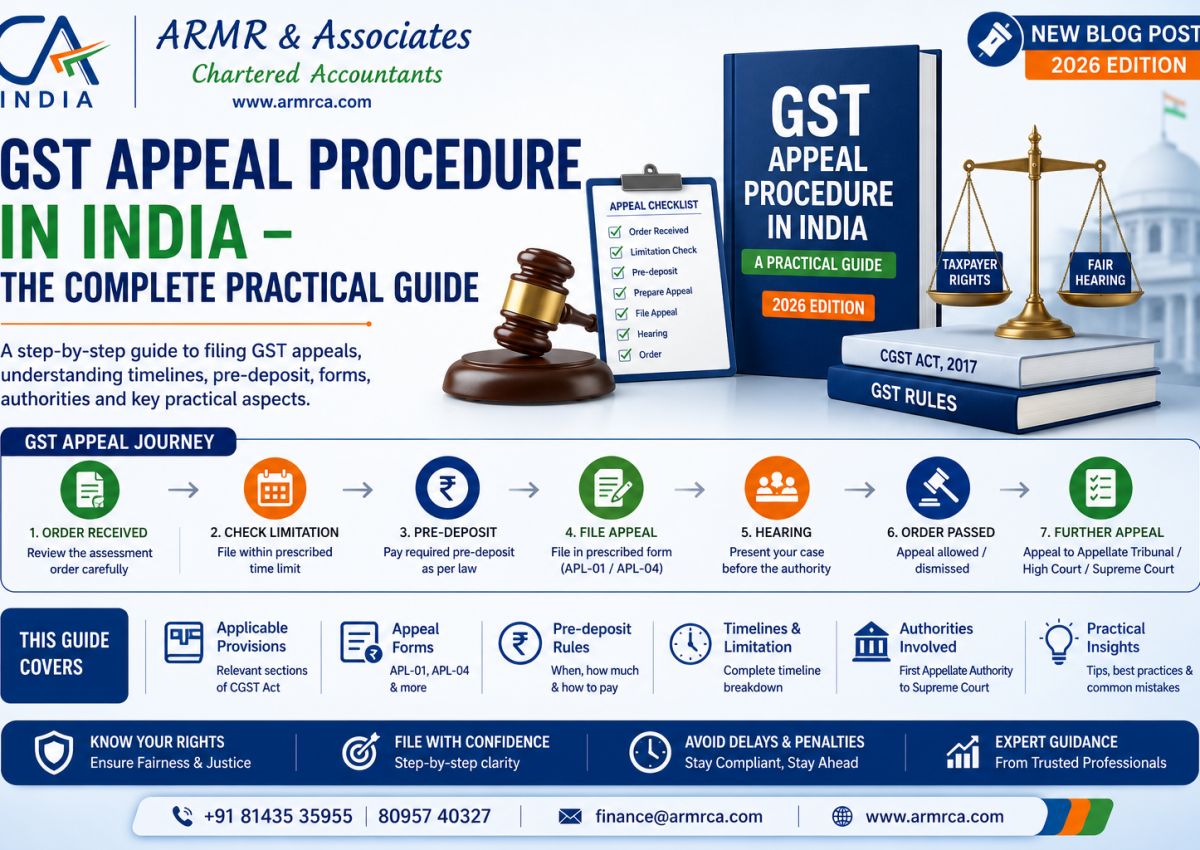
Objective
This guide is designed to be the most comprehensive resource on GST appeals in India, covering the complete litigation lifecycle—from the receipt of a GST notice to the final appeal before the Supreme Court. It is intended for taxpayers, Chartered Accountants, tax practitioners, advocates, CFOs, finance teams, and business owners.
What Makes This Guide Different?
✔ Every important GST notice
✔ Every stage of litigation
✔ Applicable legal provisions
✔ Time limits
✔ Reply strategy
✔ Hearing process
✔ Appeal drafting
✔ Mandatory pre-deposit
✔ Recovery proceedings
✔ Tribunal appeals
✔ High Court remedies
✔ Supreme Court appeals
✔ Practical checklists
✔ Judicial precedents
✔ Frequently asked questions
Proposed Structure
PART 1 – Understanding GST Litigation
Chapter 1 – Introduction
Chapter 2 – Why GST Notices are Issued
Chapter 3 – Types of GST Proceedings
Chapter 4 – Litigation Flow Chart
Chapter 5 – Authorities under GST
Chapter 6 – Important Definitions
PART 2 – Every GST Notice Explained
Create separate chapters for:
Registration Notices
- REG-03
- REG-17
- REG-23
- REG-27
- REG-31
For each notice explain:
• Legal Provision
• Purpose
• When issued
• Reply Time
• Documents Required
• Practical Example
• Consequences of Non-response
• Next Course of Action
Assessment Notices
Cover the ASMT series comprehensively.
Explain:
Self-assessment
Provisional assessment
Scrutiny assessment
Best judgment assessment
Summary assessment
Demand Notices
Cover every DRC Form.
Include:
DRC-01
DRC-01A
DRC-03
DRC-06
DRC-07
DRC-13
DRC-16
DRC-22
etc.
Audit Proceedings
Explain:
Department Audit
Special Audit
Taxpayer Rights
Reply Process
Appeal Options
Search & Seizure Proceedings
Inspection
Search
Seizure
Detention
Confiscation
MOV Forms
Appeal Process
Refund Proceedings
Refund Rejection
Export Refund
Inverted Duty Refund
Appeal Procedure
PART 3 – Reply to GST Notices
How to analyse notice
Preparing documentary evidence
Legal research
Drafting reply
Uploading reply
Attending personal hearing
Additional submissions
Natural justice
PART 4 – Understanding GST Orders
Assessment Order
Demand Order
Penalty Order
Cancellation Order
Refund Order
Detention Order
Confiscation Order
Explain:
Legal effect
Recovery implications
Appealability
PART 5 – First Appeal (Section 107)
Who can file
Who cannot file
Orders appealable
Orders not appealable
Time limit
Delay condonation
Mandatory pre-deposit
Documents required
Drafting statement of facts
Grounds of appeal
Additional evidence
Personal hearing
Order of Appellate Authority
PART 6 – Mandatory Pre-deposit
Explain with illustrations.
Example 1
Tax demanded ₹20 Lakhs
Admitted ₹5 Lakhs
Disputed ₹15 Lakhs
Calculate mandatory payment.
Example 2
Penalty-only demand
Example 3
Interest dispute
Example 4
Mixed demand
Include:
Common mistakes
Frequently misunderstood provisions
Refund of pre-deposit
PART 7 – Recovery Proceedings
When recovery starts
Whether recovery is stayed
Bank attachment
Property attachment
Adjustment against refunds
Auction
How to obtain relief
PART 8 – Appeal Before GST Appellate Tribunal
Jurisdiction
Benches
Procedure
Additional pre-deposit
Hearing
Orders
Rectification
Restoration
PART 9 – Appeal Before High Court
Substantial question of law
Maintainability
Limitation
Writ jurisdiction
Interim relief
Stay petitions
PART 10 – Appeal Before Supreme Court
Appealable matters
Special Leave Petition
Important principles
PART 11 – Special Categories of Appeals
Cancellation of GST Registration
Input Tax Credit denial
Fake Invoice matters
Refund rejection
Detention of goods
Confiscation
E-way Bill penalty
RCM disputes
Classification disputes
Valuation disputes
Export disputes
PART 12 – Drafting Appeals
Model:
Statement of Facts
Grounds
Prayer
Additional Grounds
Compilation Index
Paper Book
Written Arguments
PART 13 – Important Judicial Decisions
Arrange judgments topic-wise.
Natural Justice
Limitation
Pre-deposit
Input Tax Credit
Penalty
Registration
Recovery
Refund
Detention
Each case should include:
Facts
Issue
Decision
Practical takeaway
PART 14 – Ready Reckoner Tables
Create quick-reference tables for:
Notice-wise Reply Period
Appeal Time Limits
Delay Condonation
Forms
Authorities
Pre-deposit
Recovery
Next Remedy
Applicable Sections
PART 15 – Practical Flowcharts
Flowchart 1
Notice → Reply → Hearing → Order
↓
Appeal
↓
Tribunal
↓
High Court
↓
Supreme Court
Flowchart 2
Demand Order
↓
Should You Pay?
↓
Should You Appeal?
↓
Pre-deposit
↓
Stay
↓
Recovery
Flowchart 3
Cancellation of Registration
↓
Reply
↓
Order
↓
Revocation
↓
Appeal
PART 16 – Practical Checklists
Checklist before replying
Checklist before hearing
Checklist before appeal
Checklist before Tribunal
Checklist before High Court
PART 17 – Frequently Asked Questions
Prepare approximately 75–100 practical questions based on real client situations.
Examples include:
Can I file an appeal after the limitation period?
Can I appeal without paying the pre-deposit?
Can I challenge only the penalty?
Can I submit additional evidence?
Can multiple orders be challenged in one appeal?
What happens if my appeal is dismissed for default?
Can recovery continue after filing an appeal?
PART 18 – Conclusion
The GST appeal mechanism is a structured legal remedy that enables taxpayers to challenge incorrect assessments, penalties, registration cancellations, refund rejections, and other adverse orders. Success depends on timely action, a well-prepared factual record, compliance with statutory timelines and pre-deposit requirements, and persuasive legal submissions. Businesses should respond proactively to notices and seek professional advice at the earliest stage to minimise litigation risk and improve the likelihood of a favourable outcome.
